
0

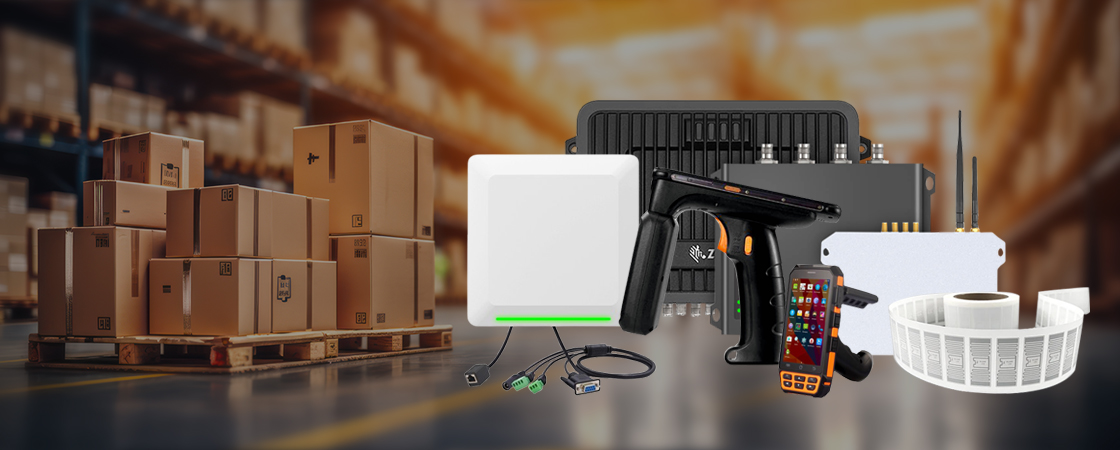
The manufacturing industry is evolving rapidly with the adoption of automation, real-time visibility, and data-driven decision-making. In this environment, businesses can no longer depend only on manual records, barcode scanning, or disconnected tracking methods if they want to maintain efficiency and competitiveness. Delays in material movement, inaccurate stock records, poor work-in-progress visibility, and difficulty in tracing finished goods can all create serious operational challenges.
This is where RFID technology is bringing measurable change. RFID solutions help manufacturers identify, track, and manage raw materials, semi-finished products, finished goods, tools, returnable assets, and operational workflows with higher speed and accuracy. Unlike conventional tracking methods, RFID does not always require direct line-of-sight scanning, which makes it more suitable for industrial environments where fast movement and process continuity are essential.
In modern manufacturing facilities, RFID is not just a tracking tool. It has become a foundational technology for process automation, asset intelligence, production monitoring, and inventory control. When implemented correctly, it improves visibility across operations and supports better decision-making from the warehouse floor to dispatch management.
What Are RFID Solutions for Manufacturing Industry?
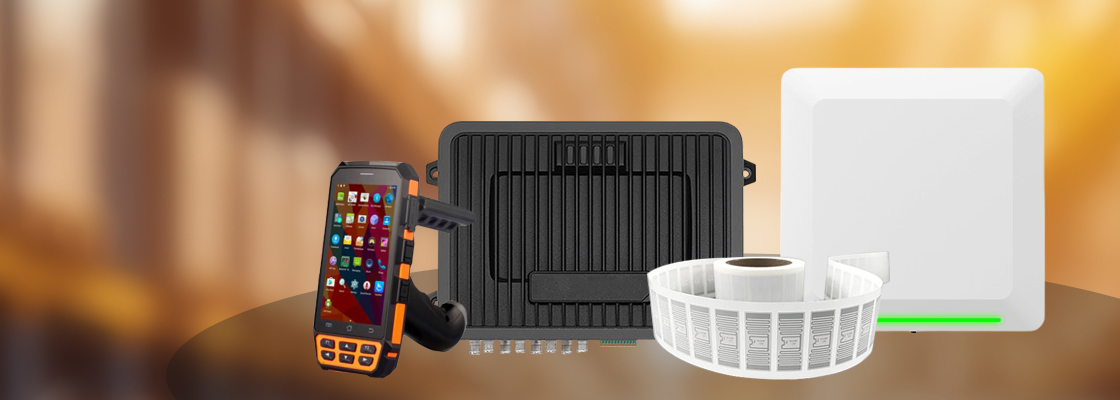
RFID solutions for manufacturing refer to the use of RFID readers, antennas, tags, and software systems to automatically identify and track materials, assets, and production activities throughout a factory or industrial operation. These solutions are designed to reduce manual dependency and provide accurate, real-time information at different stages of manufacturing.
A typical RFID manufacturing setup includes:
- RFID readers for capturing tag data
- RFID antennas for defining read zones
- RFID tags attached to materials, bins, pallets, tools, or finished goods
- Software integration with ERP, WMS, MES, or custom industrial systems
These solutions are commonly used for:
- Raw material tracking
- Work-in-progress monitoring
- Finished goods identification
- Tool and equipment management
- Warehouse movement tracking
- Industrial access and process automation
RFID technology is especially valuable in manufacturing because production environments often involve repeated movement, bulk handling, and time-sensitive workflows. Automated data capture reduces errors and creates better operational control.
Types of RFID Solutions Used in Manufacturing
Choosing the right RFID solution depends on the operational requirement, the physical environment, and the type of items being tracked. In manufacturing, there is rarely a one-size-fits-all setup. Instead, different RFID configurations are selected based on production flow, warehouse layout, and asset type.
1. Fixed RFID Reader Solutions
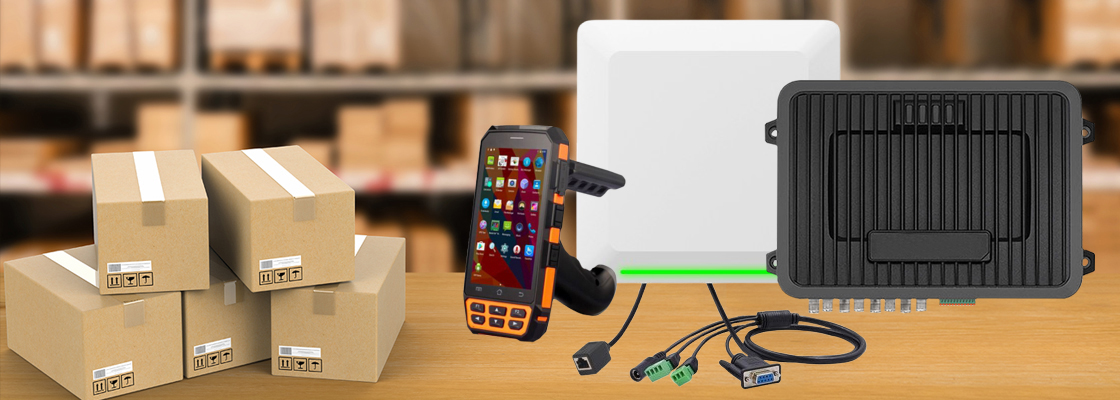
Fixed RFID readers are installed permanently at critical checkpoints such as production line stations, dock doors, warehouse gates, conveyor sections, or entry and exit points. These readers continuously monitor tagged items as they pass through a defined read zone.
In manufacturing facilities, fixed readers are widely used where automation and uninterrupted scanning are required. They help in monitoring the movement of pallets, bins, finished goods, and reusable containers without manual intervention. Because of their ability to operate continuously, they are suitable for production-intensive environments.
2. Handheld RFID Reader Solutions
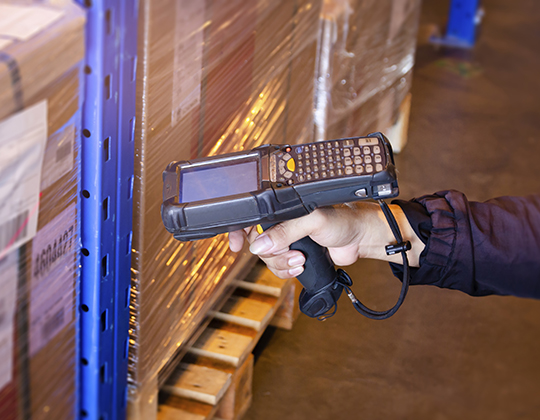
Handheld RFID readers are portable devices used when mobility is important. These readers are useful for stock verification, manual audits, maintenance checks, and locating misplaced tools or equipment inside the factory.
Manufacturers often use handheld devices when they need flexible scanning in storage areas, quality control zones, or large industrial yards. They are especially useful when a fully fixed infrastructure is not practical for every location.
3. RFID Tag-Based Product and Asset Solutions
The effectiveness of an RFID system depends heavily on choosing the correct tag. Manufacturing environments may involve metal surfaces, heat exposure, vibration, moisture, dust, or outdoor conditions. Because of this, different tag types are used such as RFID labels, industrial hard tags, or on-metal RFID tags.
The right tag ensures consistent readability and long-term durability. This is particularly important when tags are attached to machines, metallic bins, tools, automotive parts, or industrial components.
Key Factors to Consider Before Implementing RFID in Manufacturing
Implementing RFID in manufacturing is not only about purchasing hardware. The success of the system depends on proper planning, environmental understanding, and alignment with business processes. Several technical and practical factors must be evaluated before selecting an RFID solution.
1. Read Zone and Process Flow Requirements
Every manufacturing unit has a different process flow. Some businesses need RFID at warehouse gates, while others need tracking at workstation level, assembly lines, or dispatch points. The read distance and coverage area must match the actual operation.
For example, a dock door solution requires wider coverage and stronger read consistency, whereas workstation-level tracking may require more controlled and narrow read zones. Understanding movement patterns is critical before reader and antenna selection.
2. Environmental Conditions
Manufacturing environments are often more challenging than office or retail spaces. Metal structures, machinery, electrical noise, dust, vibration, and temperature variations can affect RFID performance. If the environment is harsh, industrial-grade readers and rugged RFID tags become necessary.
Metal-heavy applications in particular require careful selection of on-metal tags and proper antenna positioning. Otherwise, read reliability may suffer and system performance may become inconsistent.
3. System Integration Capability
RFID solutions deliver the highest value when they are integrated with business software. Manufacturers usually need RFID data to flow into ERP systems, warehouse management platforms, inventory software, or production monitoring systems.
Before implementation, it is important to confirm whether the RFID reader supports the required communication interfaces such as TCP/IP, RS232, RS485, relay outputs, or API-based integration. Without proper connectivity, the RFID system may work in isolation and lose much of its strategic value.
4. Tag Selection for Product Type
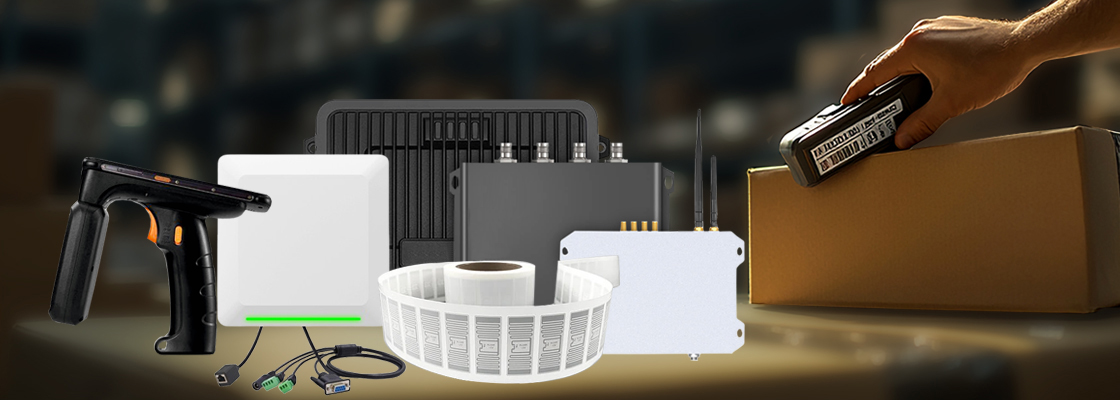
Different production materials need different types of RFID tags. Cartons may require RFID labels, metal racks may require on-metal tags, and returnable industrial assets may need durable hard tags. Tag performance directly affects data accuracy, so selection must be based on actual use conditions rather than cost alone.
5. Long-Term Scalability
Manufacturing businesses often start RFID with one process and later expand it to other operations. Therefore, the system should be scalable. A good RFID solution should support future expansion into warehouse automation, asset tracking, gate automation, returnable packaging management, or real-time production monitoring.
Industrial Use Cases of RFID in Manufacturing
RFID in manufacturing is practical because
it solves real operational problems. Its value becomes most visible in
applications where manual tracking leads to delays, errors, or poor visibility.
Raw Material Tracking
Manufacturers can attach RFID tags to raw material bins, pallets, or incoming shipments to identify and monitor their movement from receiving areas to storage and then to production. This improves stock transparency and reduces the chances of misplaced material or delayed availability.
Work-in-Progress Monitoring
Tracking work-in-progress is one of the most important industrial applications of RFID. By reading tagged items at different process stages, manufacturers can know where a product is, which process it has completed, and where bottlenecks are forming. This creates better production control and supports faster decision-making.
Finished Goods and Dispatch Control
RFID helps verify finished goods before dispatch and improves shipment accuracy. Instead of depending only on manual confirmation, tagged products can be automatically identified during packaging, loading, or outbound movement. This reduces shipping mistakes and improves operational speed.
Tool and Equipment Management
Factories often lose time and money due to missing tools, untracked equipment movement, or poor maintenance visibility. RFID allows critical assets to be identified and tracked more efficiently. This improves utilization and helps ensure that equipment is available when needed.
Warehouse and Internal Logistics Automation
Manufacturing operations are closely tied to warehouse efficiency. RFID helps automate internal movement tracking between warehouse zones, production areas, and dispatch areas. This improves inventory accuracy and gives managers a more reliable operational picture.
Why Working with an Experienced RFID Supplier Matters
RFID implementation in manufacturing is a technical process that requires more than just supplying products. Industrial environments behave differently depending on layout, product material, movement speed, interference conditions, and integration needs. This is why working with an experienced RFID supplier is important.
A knowledgeable supplier does not only recommend a reader. They evaluate the site, understand the workflow, identify interference risks, suggest the correct antenna placement, and match tag types to actual industrial conditions. This practical understanding reduces deployment errors and improves long-term performance.
An experienced RFID partner can support businesses in:
- Site requirement analysis
- Reader and antenna selection
- Tag testing for actual material type
- Integration planning
- Performance optimization
- Future scalability
This makes the implementation more reliable and helps businesses achieve better return on investment.
Expert Recommendation from MORX RFID Technical Team
Based on industrial RFID deployment experience, manufacturing businesses should begin with a clear operational objective rather than starting with hardware preference. Some businesses need production visibility, while others need inventory automation, asset traceability, or dispatch accuracy. The RFID design should always align with the actual business goal.
Before full implementation, practical field testing should be carried out under real site conditions. This includes testing tag readability on actual product surfaces, validating read zones, checking interference near metal structures, and confirming software integration capability. A technical site assessment often prevents larger operational problems later.
For most manufacturing environments, the best approach is phased implementation. Starting with one critical process—such as raw material movement, work-in-progress monitoring, or dispatch control—allows the business to validate results and then expand the solution in a structured manner.
Conclusion
RFID solutions are becoming an essential part of modern manufacturing because they improve visibility, reduce manual effort, enhance data accuracy, and support process automation. From raw material tracking to finished goods dispatch, RFID creates stronger control across industrial operations and helps businesses operate with greater efficiency.
However, successful RFID implementation depends on selecting the right combination of readers, antennas, tags, and integration methods. Manufacturing businesses should approach RFID as a complete operational solution rather than a standalone product purchase. With proper planning and expert guidance, RFID can deliver measurable improvements in productivity, traceability, and long-term operational performance.
For manufacturers aiming to build smarter, faster, and more reliable industrial processes, RFID is no longer just an upgrade—it is a strategic tool for transformation.
CategoryBlog