
0

RFID Labels
RFID Labels for Accurate Identification & Tracking
MORX RFID is a trusted RFID Label Manufacturer and RFID Labels Supplier offering high-performance RFID Labels for inventory tracking, asset identification, warehouse automation, retail management, and industrial applications. Our advanced UHF RFID Labels are designed for accurate, long-range, and high-speed data capture across enterprise and industrial environments.
MORX RFID also provides durable RFID Smart Labels engineered for consistent read performance, reliable encoding, and seamless integration with RFID readers, printers, and automation systems. These labels support efficient tracking operations while improving operational visibility, productivity, and inventory accuracy.
Showing all 19 results
-

27×15mm Impinj Monza® R6-P RFID UHF Inlay
Read more -
6926 Jewellery label
Read more -
Jewellery Tag
Read more -
Library Label
Read more -
MORX 44*18mm
Read more -
Morx 54*33mm
Read more -
Morx 73*20mm
Read more -
MORX 74*18mm
Read more -
MORX 76*20mm
Read more -
MORX 96*26mm
Read more -
Morx Flag Label
Read more -
Morx Hang Tag
Read more -
Morx Jewelry Tag
Read more -
Morx Laundry Textile RFID Label
Read more -
RFG Windshield Tag
Read more -
RFG-Tamper proof Tag
Read more -

RFID TAFFETA TAG
Read more -
UHF Woven Washable Tag
Read more -
Windshield Tag
Read more


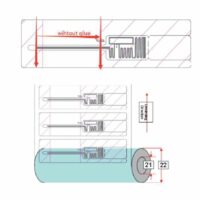
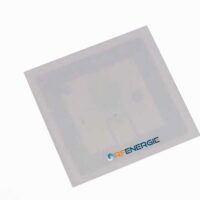
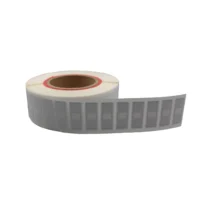
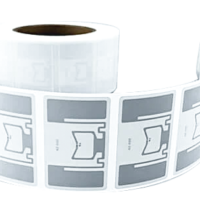
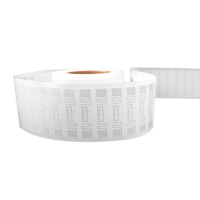
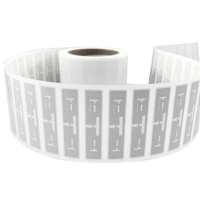
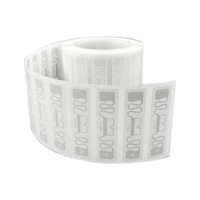
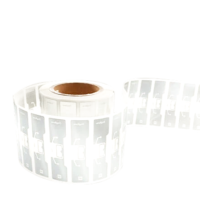
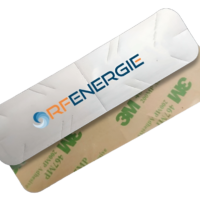
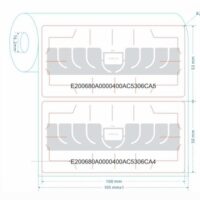
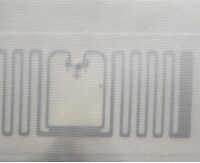
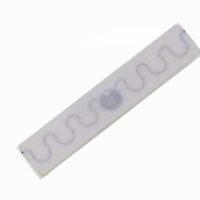
Types of RFID Labels
Morx offers a wide variety of RFID label formats to match different materials, operating conditions, and use cases.
RFID Inlays
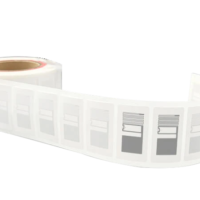
RFID inlays are the core component of RFID labels, consisting of an embedded chip and antenna on a thin substrate. They are ideal for converting standard labels into RFID-enabled tags for cartons, packaging, and logistics workflows.
RFID Smart & Sticker Labels
RFID smart labels combine printable surfaces with integrated RFID inlays, allowing barcode and RFID functionality in a single label. RFID sticker labels are lightweight and easy to apply, making them suitable for files, boxes, retail items, and general asset identification.
Tamperproof & On-Metal RFID Labels
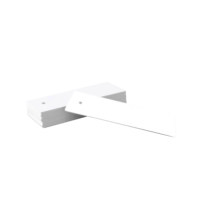
Tamperproof RFID labels are designed to show visible damage or become non-functional if removed, making them suitable for security-sensitive applications.
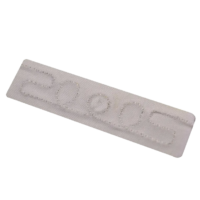
On-metal RFID labels are engineered with specialized materials and antenna designs to deliver stable read performance when applied directly to metal surfaces, equipment, and containers.
Built for Durability & Performance
Morx RFID Labels are designed to perform reliably in real-world conditions:
- Heat-resistant materials for industrial and textile applications
- Chemical and moisture resistance for harsh handling environments
- High read-rate accuracy for fast and bulk scanning
- Stable performance across fixed and handheld RFID readers
This durability ensures long tag life and dependable system operation.
Industry Applications
RFID labels are widely used across multiple sectors:
- Inventory and warehouse management
- Retail item tracking and loss prevention
- Logistics and supply chain operations
- Apparel and laundry management
- Library, document, and file tracking
- Asset tracking in offices and industrial facilities
Selecting the right RFID label improves read accuracy, reduces manual errors, and enhances overall system efficiency.
Reliable RFID Label Solutions for Industrial & Enterprise Applications
MORX RFID develops RFID Labels optimized for retail, logistics, manufacturing, laundry management, asset tracking, and warehouse automation applications. As an experienced RFID Label Manufacturer, we provide multiple RFID label formats suitable for different surfaces, environments, and operational requirements while ensuring stable read performance and long-term durability.
Why Choose Morx RFID Labels?
MORX RFID is a reliable RFID Labels Supplier and RFID Label Manufacturer delivering scalable RFID Smart Labels and UHF RFID Labels for industrial, enterprise, retail, and logistics applications requiring high accuracy and dependable tracking performance.
- Broad selection of RFID label formats and sizes
- Compatibility with standard UHF RFID readers and printers
- Consistent performance across high-volume deployments
- Support from an experienced RFID solutions team
- Trusted RFID labels manufacturer serving industrial and enterprise needs
Our RFID labels are designed to help businesses scale automation while maintaining accuracy and reliability.
Frequently Asked Questions (FAQs)
1. What is the difference between RFID inlays and RFID labels?
RFID inlays contain the chip and antenna, while RFID labels include a printable surface and adhesive for direct application.
2. Are RFID labels suitable for industrial environments?
Yes. Specialized RFID labels and hard tags are designed to resist heat, chemicals, and physical stress.
3. How do UHF RFID labels improve operational efficiency?
UHF RFID labels enable long-range and bulk reading, reducing scan time and improving inventory accuracy.
3. Can RFID labels be customized?
Yes. RFID labels can be customized in size, format, and encoding to match specific application requirements.
Technical Comparison of RFID Label Types
| Product Type | Best For | Key Feature | Read Range | Environment Type |
|---|---|---|---|---|
| UHF RFID Inlays | High-volume inventory & packaging | Thin, flexible design for easy label conversion | Up to 6–8 meters | Dry, controlled indoor environments |
| RFID Smart / Sticker Labels | Retail, logistics & asset identification | Printable surface with integrated RFID chip | Up to 4–6 meters | Indoor & light industrial environments |
| RFID Laundry & Textile Labels | Garment tracking & textile management | Heat, water & chemical resistant construction | Up to 2–4 meters | Harsh environments (wash, heat, moisture) |