
0

Controller
Morx RFID supplies RFID access control controllers, including the HID Controller and SEMAC Controller, designed for reliable Door Access Controller applications across commercial, enterprise, and industrial facilities. As a core component of an RFID Access Control System, each controller manages door access, verifies RFID credentials, records event logs, and grants or denies entry in real time. Browse the controllers below, or read on to find the right solution for your building’s access control requirements.
Showing all 2 results
What Is a Door Access Controller?
A door access controller is the hardware unit that decides whether a person is allowed through a specific door. When someone presents an RFID card at a reader, the reader passes that credential to the controller, which checks it against its stored user database and either releases the door lock or denies access — all within a fraction of a second.
The controller also does the record-keeping: every entry attempt, successful or denied, is logged with a timestamp. This is what makes an RFID access control system auditable — facility managers can see exactly who accessed which door and when, which matters for compliance, incident investigation, and day-to-day security management.
HID Controller vs SEMAC Controller — Which One Do You Need?
Morx RFID supplies two access control controller models, each built for a different scale of deployment.
HID Controller — Commercial & Enterprise Door Access
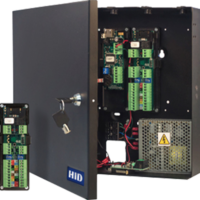
The HID Controller is designed for straightforward, reliable building entry management. It handles up to 1,000 users and 2 doors out of the box — expandable to 8 doors — with a web-based management portal that removes the need for a dedicated PC or server. It’s the right fit for offices, commercial buildings, and institutions that need dependable multi-door control without complex security logic.
SEMAC Controller — High-Security & Industrial Access Control
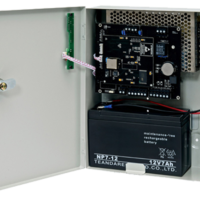
The SEMAC Controller is built for facilities where access policy enforcement matters as much as the door lock itself. It supports up to 20,000 RFID cards, anti-passback and interlocking logic, time-zone and group-based access rules, and optional IP camera integration — making it suited to industrial sites, government buildings, and high-security or mission-critical facilities where traceability of movement is a requirement, not a nice-to-have.
HID vs SEMAC — Technical Comparison
| Specification | HID Controller | SEMAC Controller |
|---|---|---|
| Door Capacity | 2 doors standard, expandable to 8 | 1, 2, or 4-door configurations |
| User Capacity | Up to 1,000 users, 3 cards/user | Up to 20,000 RFID cards |
| Event Log Storage | Up to 100,000 events | 60,000+ events, 1,500 system logs |
| Reader Compatibility | Standard RFID access components | Wiegand 26 / 34 / 66 format readers |
| Security Logic | Multi-door authentication | Anti-passback, interlocking, zone control |
| Management | Web-based, no PC/server required | Centralized web-based platform |
| Best Suited For | Commercial buildings, offices, institutions | High-security, industrial & government facilities |
Why Choose Morx RFID Controllers
- RFID-based credential verification for fast, accurate access decisions
- Detailed event logging for audit trails, compliance, and incident review
- Web-based centralized management — control access from any location
- Expandable architecture — add doors and users as your facility grows
- Industrial-grade enclosures built for continuous 24/7 operation
- Compatible with standard Wiegand-format RFID readers and credentials
How a Controller Fits Into a Complete Access Control System
A controller doesn’t work in isolation — it’s one part of a three-piece system: the RFID card or credential, the reader that captures it, and the controller that makes the access decision and logs it. For door and building entry points, Morx controllers pair with Smart Card Readers to capture credentials at each entry point.
For larger facilities that also need vehicle-level access control — parking gates, loading docks, campus entrances — the same access logic extends through Fixed RFID Readers and Entrance Automation systems such as boom barriers and turnstiles, giving a facility one consistent access control framework across both pedestrian doors and vehicle gates.
Common Use Cases for RFID Door Controllers
- Commercial buildings & offices: Employee door access, visitor authorization, secure building entry
- Educational institutions: Campus access control, staff and student entry management, restricted department access
- Healthcare facilities: Access-controlled clinical zones, staff authorisation, patient area segregation
- Industrial & government facilities: High-security zones, correctional facilities, data centres, and mission-critical infrastructure requiring anti-passback and audit-grade logging
Frequently Asked Questions (FAQs)
What is the difference between an HID controller and a SEMAC controller?
The HID Controller is built for standard commercial and enterprise door access — up to 1,000 users and 8 doors. The SEMAC Controller is built for higher-security, higher-volume deployments — up to 20,000 users, with anti-passback and interlocking logic for facilities like industrial plants, government buildings, and correctional facilities.
Can these controllers work without a dedicated server?
Yes. Both the HID and SEMAC controllers use web-based management platforms, so facility teams can manage access from any location without setting up or maintaining a dedicated PC or server.
How many doors can one controller manage?
The HID Controller supports 2 doors standard, expandable up to 8. The SEMAC Controller supports 1, 2, or 4-door configurations depending on the model selected — larger facilities typically deploy multiple units across zones.
Do these controllers work with existing RFID readers and cards?
Yes. Morx access control controllers are compatible with standard RFID credentials and Wiegand-format readers (26 / 34 / 66), so they integrate with most existing card-based access hardware rather than requiring a full system replacement.
What is anti-passback and do I need it?
Anti-passback prevents a single credential from being used to enter a zone twice in a row without exiting first — it stops card sharing and tailgating-based access misuse. This is available on the SEMAC Controller and matters most for high-security facilities like data centres, banks, and government sites. Standard commercial buildings typically don’t require it.
Get the Right Access Control Controller for Your Facility
Whether you’re managing a single office building or a multi-zone industrial facility, choosing between the HID Controller and SEMAC Controller comes down to scale and security policy needs. Contact the Morx RFID team for a site-specific recommendation, or explore our full range of Smart Card Readers and Entrance Automation systems to build a complete access control system.