
0

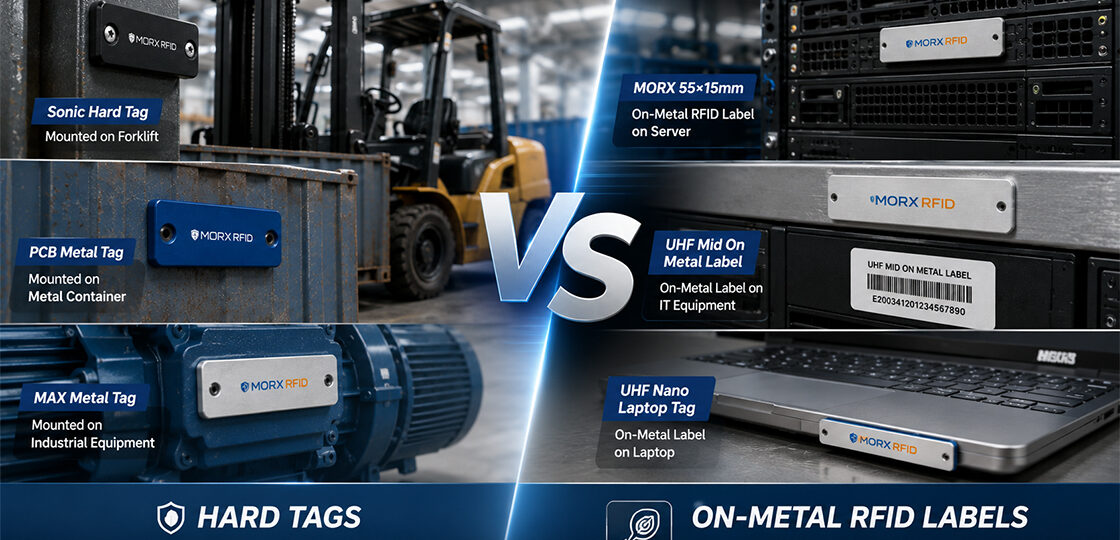
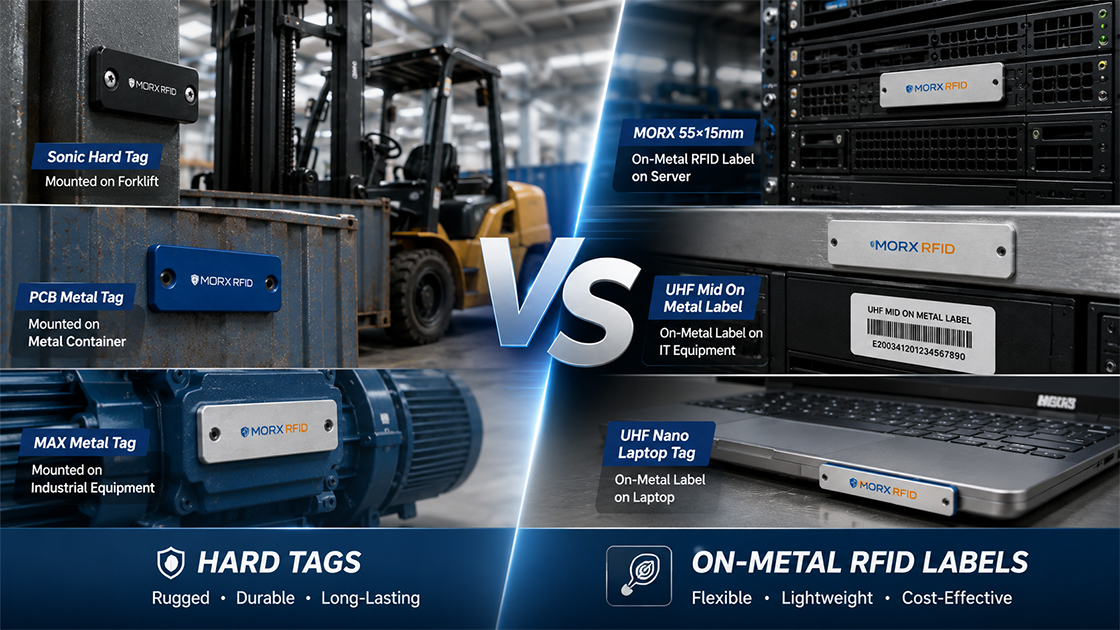
Hard Tags vs On-Metal RFID Labels
Introduction
When deploying an RFID tracking system for industrial assets, one of the most common questions buyers ask is: should I use Hard Tags or On-Metal RFID Labels? Both are designed to work on or near metal surfaces, but they serve different purposes and perform very differently depending on the environment and asset type. This guide breaks down everything you need to know to make the right choice.
What Are RFID Hard Tags?
RFID Hard Tags are rigid, encased tags made from durable materials like ABS plastic, nylon, or epoxy. They house an RFID inlay (chip + antenna) inside a protective shell and are designed to survive extreme industrial conditions — heat, moisture, vibration, chemicals, and mechanical impact.
They are commonly used in:
- Manufacturing plants and production lines
- Outdoor asset tracking (containers, vehicles, machinery)
- Mining, oil & gas, and construction sites
- High-temperature environments such as foundries or powder-coating lines
You can explore the full range of RFID Hard Tags available at Morx RFID — including options rated for on-metal and non-metal mounting, with IP66/IP67 protection.
What Are On-Metal RFID Labels?
On-Metal RFID Labels are thin, flexible UHF label tags with a built-in anti-metal layer that prevents signal detuning when the tag is placed directly on metallic surfaces. Without this layer, a standard RFID label placed on metal would fail to read because the metal absorbs and reflects the RF signal.
They are ideal for:
- IT assets such as laptops, servers, and network equipment
- Shelving racks and metal storage units
- Tools, instruments, and light machinery
- Cartons, pallets, or containers with metal components
Browse the complete range of On-Metal RFID Labels at Morx RFID — available in various sizes with thermal-printable surfaces for barcode + RFID dual encoding.
Hard Tags vs On-Metal RFID Labels — Feature Comparison
| Feature | Hard Tags | On-Metal RFID Labels |
|---|---|---|
| Form Factor | Rigid, encased housing | Thin, flexible label |
| Mounting Surface | Metal & non-metal surfaces | Metal surfaces only |
| Durability | Very high — IP66/IP67 rated | Moderate — surface-level protection |
| Read Range | Up to 10+ metres (UHF) | 3–7 metres (UHF) |
| Printable | No | Yes — thermal/RFID printers |
| Cost | Higher per unit | Lower per unit |
| Best For | Heavy industry, outdoor, harsh environments | IT equipment, tools, shelves, light machinery |
| Reusability | Reusable across assets | Generally single-use |
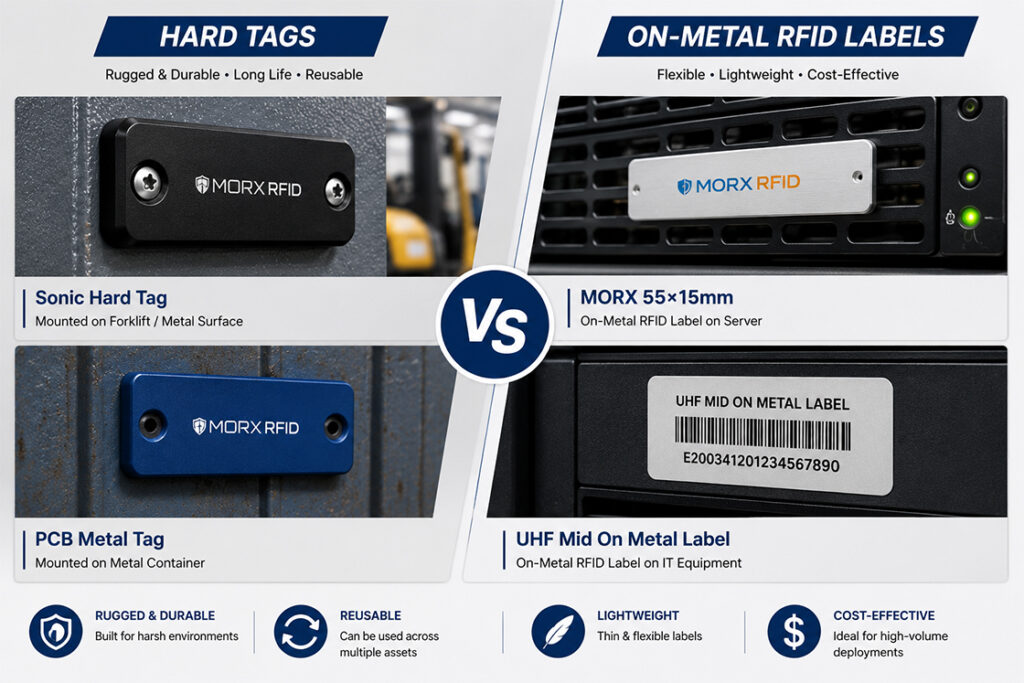
When to Choose Hard Tags
Choose Hard Tags when your environment is demanding and the tag needs to survive for years without replacement.
- Outdoor or harsh environments with dust, water, extreme temperatures
- Assets that are frequently handled, dropped, or moved roughly
- Long read range is required (up to 10+ metres with a fixed reader)
- The tag will be used across multiple asset life cycles (reusable)
- Welded or bolted mounting is preferred over adhesive
Hard Tags also pair well with UHF Fixed Readers and Handheld RFID Readers for large-scale asset tracking across warehouses or production floors.
When to Choose On-Metal RFID Labels
Choose On-Metal Labels when volume and cost-efficiency matter more than extreme durability.
- IT asset management — tagging hundreds of laptops, monitors, or servers
- Retail or office environments where tags are not exposed to harsh conditions
- When printed barcodes are needed alongside RFID for dual-identification
- High-volume deployments where per-tag cost is a critical factor
- Assets that are managed in controlled indoor environments
On-Metal Labels are a popular choice for IT Asset Management and Inventory Management deployments where large numbers of tagged items need to be tracked quickly using Handheld Readers or UHF Integrated Readers.
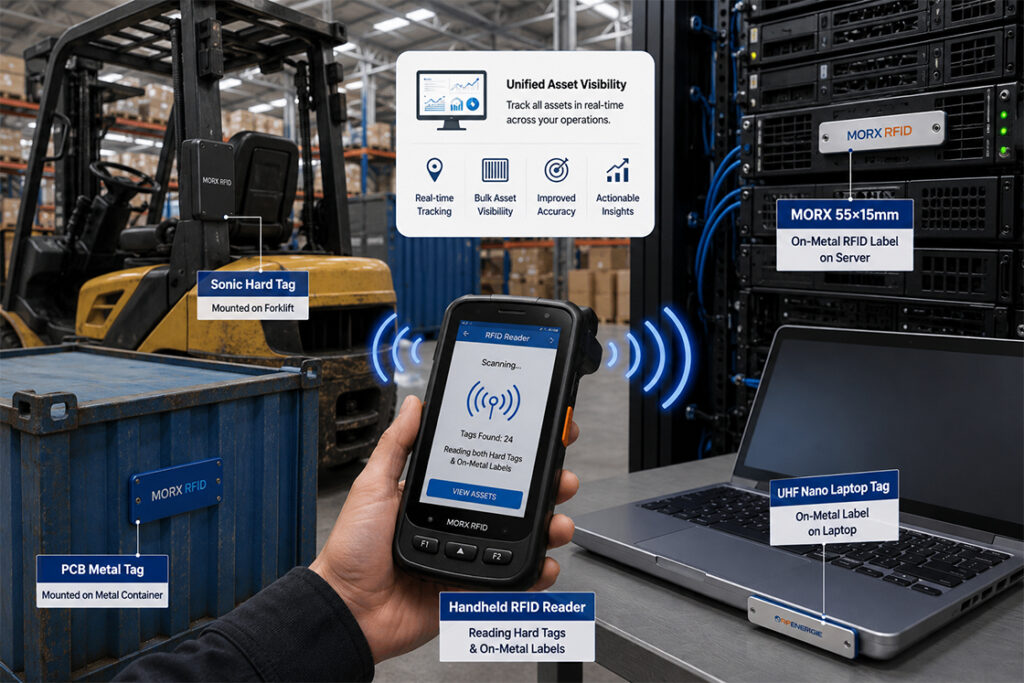
Can You Use Both in the Same Deployment?
Yes — and many industrial operations do. A common approach is:
- On-Metal Labels for office IT assets, tools, and indoor equipment
- Hard Tags for outdoor machinery, vehicles, and heavy industrial assets
This hybrid approach optimises cost without compromising performance. A UHF Handheld Reader can read both tag types during audits, giving your team a unified view of all assets regardless of tag type.
Quick Decision Guide
Still unsure? Use this simple rule:
If the asset is outdoors, in a harsh environment, or gets physically abused — go with Hard Tags.
If the asset is indoors, lightweight, and you’re deploying at scale — go with On-Metal RFID Labels.
Conclusion
Both Hard Tags and On-Metal RFID Labels are proven solutions — the right choice depends entirely on your asset type, environment, and deployment scale. Morx RFID offers both in a wide range of specifications to match every industrial requirement.
Explore our complete RFID Tags collection, or contact us to get a recommendation specific to your application. You can also visit our Solutions page to see how RFID is being applied across warehouses, manufacturing plants, IT departments, and more.
CategoryResources