
0

Introduction
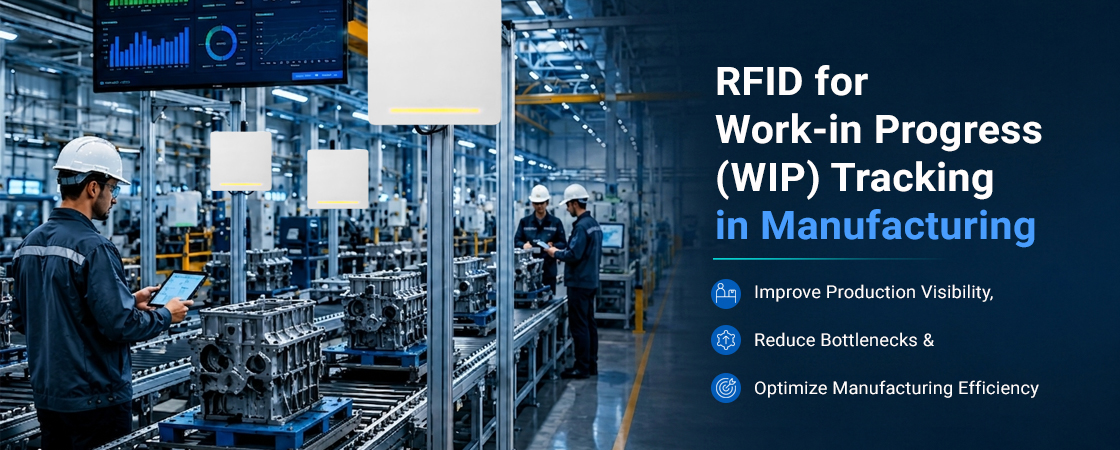
Modern manufacturing environments depend on speed, accuracy, and real-time visibility to remain competitive. As production lines become more complex, tracking work-in-progress (WIP) items manually can lead to delays, errors, and reduced productivity. Manufacturers often struggle to identify the exact location and status of products moving through different stages of production.
RFID (Radio Frequency Identification) technology provides an effective solution for WIP tracking by enabling automatic identification and real-time monitoring of materials, components, and finished products throughout the manufacturing process. By implementing RFID-based WIP tracking, manufacturers can improve production visibility, reduce bottlenecks, and make faster operational decisions.
In this guide, we explore how RFID WIP tracking works, its benefits, and why it is becoming an essential part of smart manufacturing.
What is Work-in-Progress (WIP) Tracking?
Work-in-Progress (WIP) refers to materials, components, or products that are currently moving through various stages of production but are not yet completed.
WIP tracking helps manufacturers monitor:
- Production status of each item
- Location of products on the shop floor
- Processing time at each stage
- Production bottlenecks
- Workflow efficiency
Without an effective tracking system, manufacturers often rely on manual data entry, spreadsheets, or barcode scanning, which can be time-consuming and prone to errors.
How RFID Enables WIP Tracking
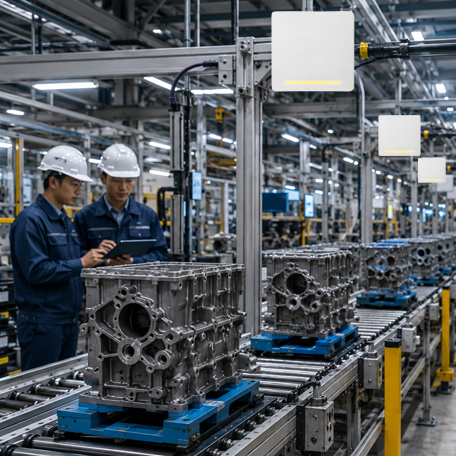
An RFID-based WIP tracking system uses RFID tags, readers, antennas, and software to automatically capture data as products move through the production process.
RFID Tags
RFID tags are attached to products, pallets, bins, or work orders. Each tag contains a unique identification number that allows the item to be tracked throughout production.
RFID Readers
Fixed or handheld RFID readers capture tag information automatically when items pass through production checkpoints.
RFID Antennas
Antennas create read zones that detect RFID tags without requiring direct line-of-sight.
RFID Software
The collected data is processed through RFID software, providing real-time visibility into production activities and inventory movement.
This automated process eliminates the need for manual scanning and significantly improves tracking accuracy.
Challenges of Traditional WIP Tracking
Many manufacturers still depend on manual tracking methods, which create several operational challenges.
Limited Visibility
Production managers may not know the exact location of products at any given time.
Human Errors
Manual data entry can result in inaccurate records and reporting issues.
Production Delays
Without real-time updates, identifying bottlenecks becomes difficult.
Inaccurate Production Data
Missing or outdated information can affect planning and scheduling decisions.
Increased Labour Effort
Employees spend additional time tracking and updating production records manually.
These challenges can impact productivity, customer satisfaction, and overall operational efficiency.

Benefits of RFID WIP Tracking in Manufacturing
Real-Time Production Visibility
RFID provides instant visibility into product movement across the manufacturing floor. Managers can monitor progress at every stage without waiting for manual updates.
Faster Bottleneck Identification
Manufacturers can quickly identify delays and areas where production is slowing down, allowing corrective action to be taken immediately.
Improved Production Accuracy
Automated data collection reduces manual errors and ensures accurate tracking information.
Better Resource Utilisation
RFID helps optimise equipment, labour, and material usage by providing accurate production insights.
Reduced Operational Costs
By eliminating manual tracking processes and reducing production delays, RFID helps lower operating expenses.
Enhanced Decision-Making
Real-time data enables managers to make informed decisions based on actual production performance rather than assumptions.
Industries Using RFID for WIP Tracking
RFID WIP tracking is widely used across multiple industries.
Automotive Manufacturing
Track components and vehicle assemblies throughout production.
Electronics Manufacturing
Monitor circuit boards, assemblies, and finished electronic products.
Textile and Garment Industry
Track fabric rolls, garments, and production batches.
Metal Fabrication
Monitor raw materials and finished components during processing.
Industrial Manufacturing
Improve visibility across complex production workflows and assembly operations.
Best Practices for Successful RFID WIP Tracking
To maximise the benefits of RFID, manufacturers should follow a structured implementation approach.
Select the Right RFID Tags
Choose tags based on environmental conditions, material type, and read range requirements.
Position Readers Strategically
Install readers at critical production checkpoints to ensure accurate data capture.
Integrate with Existing Systems
Connect RFID software with ERP, MES, or inventory management systems for seamless data flow.
Conduct Pilot Testing
Test the solution in a limited production area before full deployment.
Train Employees
Ensure staff understand system operation and data interpretation for better adoption.
Future of RFID in Manufacturing
As Industry 4.0 and smart factory initiatives continue to grow, RFID technology will play an even greater role in manufacturing operations. Integration with IoT, cloud platforms, artificial intelligence, and advanced analytics will provide deeper production insights and greater automation.
Manufacturers that adopt RFID-based WIP tracking today will be better positioned to improve efficiency, increase productivity, and remain competitive in a rapidly evolving industrial landscape.
Conclusion
RFID-based Work-in-Progress (WIP) tracking helps manufacturers gain real-time visibility into production operations, improve workflow efficiency, and reduce manual tracking efforts. By automatically capturing data throughout the production process, RFID enables faster decision-making, improved accuracy, and better production control.
As manufacturing becomes increasingly data-driven, RFID WIP tracking is no longer just an operational improvement—it is becoming a strategic advantage for businesses seeking greater efficiency and long-term growth.
CategoryBlog