
0

Introduction
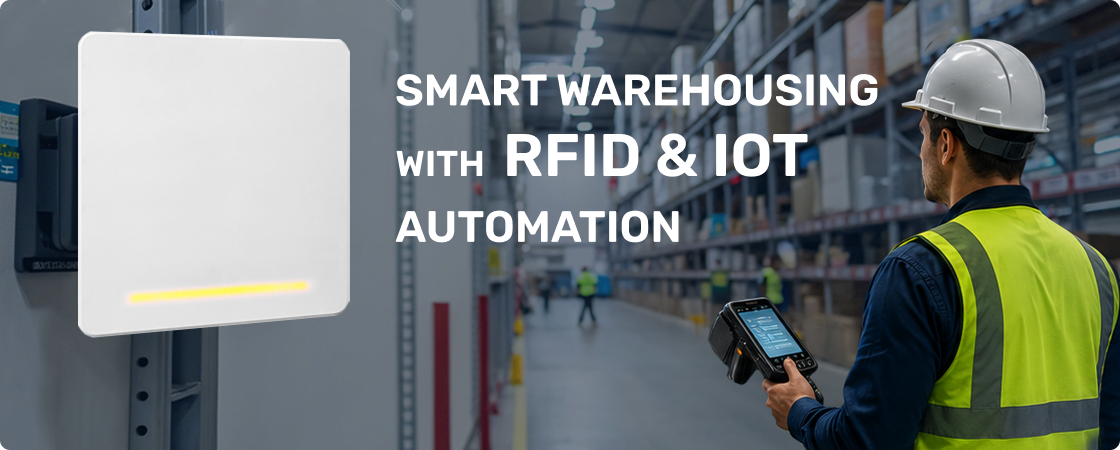
The warehousing industry is rapidly evolving with the adoption of automation and smart tracking technologies. Traditional inventory management methods often create challenges such as stock inaccuracies, delayed shipments, manual errors, and inefficient tracking. To solve these problems, businesses are increasingly implementing RFID and IoT-based warehouse management systems.
RFID (Radio Frequency Identification) technology enables automatic tracking of products, pallets, and assets without manual scanning. When integrated with IoT (Internet of Things), warehouses gain real-time visibility, faster operations, and improved efficiency. From manufacturing units and logistics hubs to retail distribution centers, RFID-powered smart warehouses are becoming essential for modern supply chains.
What Is Smart Warehouse Management?
Smart warehouse management refers to the use of technologies such as RFID, IoT sensors, automation systems, and cloud-based monitoring platforms to improve warehouse operations.
Unlike traditional barcode systems, RFID does not require direct line-of-sight scanning. Multiple tagged items can be scanned simultaneously, making warehouse operations faster and more accurate.
A smart warehouse helps businesses:
- Track inventory in real time
- Reduce manual work
- Improve order accuracy
- Monitor asset movement
- Optimize storage management
- Increase operational efficiency
- RFID Tags
- RFID Readers
- RFID Software
- RFID Antennas
Role of IoT in Smart Warehousing
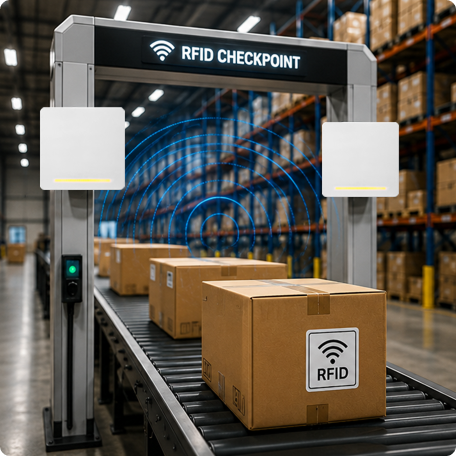
IoT enhances RFID systems by connecting warehouse devices, sensors, and software into one intelligent network. This enables warehouses to collect and analyze real-time operational data.
IoT-enabled warehouses can:
- Monitor stock movement instantly
- Send low inventory alerts
- Track equipment performance
- Improve workflow automation
- Reduce operational downtime
The integration of RFID and IoT creates a highly efficient warehouse ecosystem where decisions can be made faster and more accurately.
1. Real-Time Inventory Tracking
RFID technology enables real-time inventory visibility across the warehouse. Businesses can instantly identify:
- Product location
- Stock quantity
- Item movement history
- Dispatch and receiving status
This reduces inventory errors and improves stock management.
2. Faster Receiving and Dispatch
RFID systems automate warehouse entry and exit processes by instantly scanning tagged items during receiving and shipping operations.
Benefits include:
- Faster loading and unloading
- Reduced waiting time
- Improved order fulfillment
- Better workforce productivity
Warehouses can also integrate smart Entrance Automation systems to manage vehicle movement and access control efficiently.
3. Reduced Human Errors
Manual inventory handling often leads to operational mistakes. RFID automation minimizes manual scanning and data entry.
This helps businesses achieve:
- Higher inventory accuracy
- Fewer shipment mistakes
- Reduced stock mismatch
- Improved operational reliability
4. Better Asset Management
Warehouses often need to manage pallets, forklifts, containers, tools, and other valuable assets. RFID and IoT help track these assets in real time.
This improves:
- Asset utilization
- Equipment tracking
- Loss prevention
- Warehouse efficiency
5. Improved Warehouse Security
RFID-based access control systems improve warehouse security by monitoring authorized and unauthorized movement.
Automated gate systems integrated with RFID readers and Entrance Automation solutions help businesses manage vehicle entry and exit securely.
Importance of RFID Antennas in Warehousing
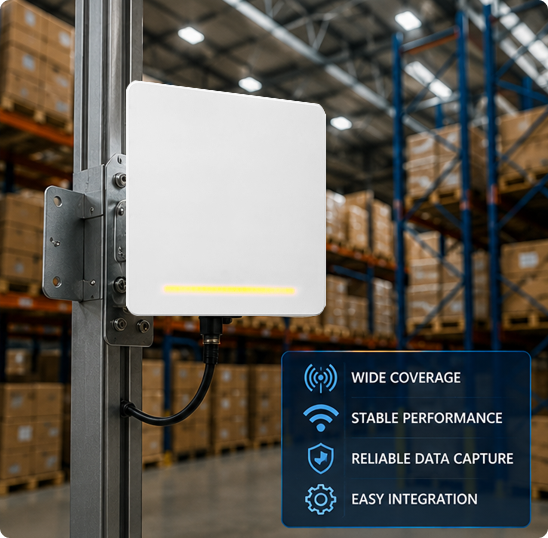
RFID antennas play a critical role in warehouse automation because they determine scanning range and signal accuracy.
Different warehouse environments require different antenna configurations based on:
- Read range requirements
- Warehouse size
- Product density
- Indoor or outdoor usage
Using high-performance RFID Antenna systems ensures better tag detection and smooth warehouse operations.
Common antenna types include:
- Circular Polarized Antennas
- Linear Polarized Antennas
- Indoor RFID Antennas
- Outdoor RFID Antennas
Proper antenna selection improves overall RFID system performance and reduces scanning errors.
Future of Smart Warehousing
The future of warehouse management is becoming more intelligent with AI, robotics, and cloud-based automation technologies. RFID and IoT will continue playing a major role in enabling smart logistics and supply chain operations.
Future warehouse solutions may include:
- AI-powered inventory forecasting
- Automated warehouse robots
- Predictive maintenance systems
- Intelligent dispatch management
- Fully automated supply chain tracking
Businesses investing in RFID automation today are building a strong foundation for future warehouse scalability and operational growth.
Conclusion
RFID and IoT technologies are transforming warehouse management by improving inventory visibility, operational efficiency, asset tracking, and warehouse security. These technologies help businesses reduce manual work, minimize errors, and streamline supply chain operations.
Advanced solutions such as high-quality RFID Antenna systems and smart Entrance Automation solutions further enhance warehouse automation capabilities.
As industries continue adopting digital transformation, RFID-powered smart warehouses will become essential for efficient and future-ready logistics management.
CategoryBlog