
0

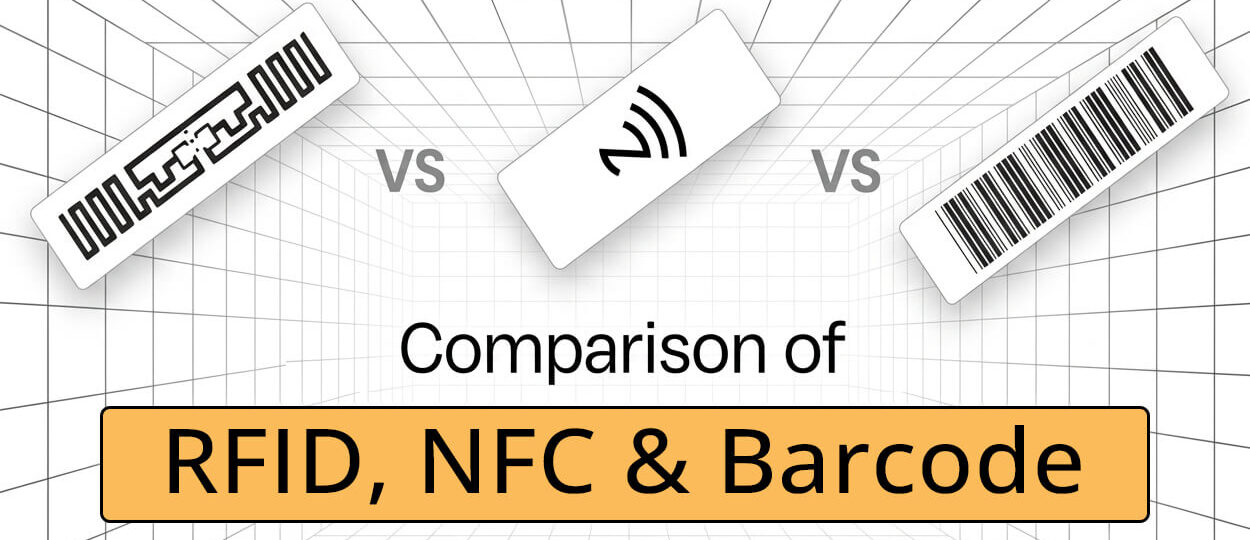
| Feature | RFID | NFC | Barcode |
|---|---|---|---|
| Technology Type | Radio Frequency (long-range) | Short-range wireless (subset of RFID) | Optical scanning |
| Read Range | Up to several meters | Very short (a few centimetres) | Very short (line-of-sight) |
| Line-of-Sight Required | No | No | Yes |
| Multiple Item Scanning | Yes (bulk reading) | No (one at a time) | No (one at a time) |
| Speed | Very fast and automated | Fast but limited range | Slower, manual scanning |
| Data Storage | High (can be updated) | Moderate | Low (fixed data) |
| Cost | Higher setup cost | Moderate | Low cost |
| Best Use Case | Large-scale inventory, logistics | Secure interactions, small data tasks | Basic inventory, retail labeling |
Let’s break each technology down by the components that you will need in order to deploy an inventory tracking system. All of the categories below apply to all three systems, whether it’s RFID, NFC or Barcode, but in slightly different form factors or functions.
- Tags or labels
- Readers or scanners
- Printers and/or Encoders
- Software
- Labour (Tagging of existing inventory, system installation, project management, etc.)
Summary
- RFID is best for large-scale, automated inventory tracking with real-time visibility.
- NFC is ideal for short-range, secure interactions like authentication or payments.
- Barcode is a cost-effective solution for simple and small-scale inventory systems.
Types of UHF RFID Readers
RFID (Radio Frequency Identification) technology is a wireless system used to automatically track and manage inventory using radio waves. It allows businesses to identify, monitor, and update inventory data in real time without manual scanning.
In inventory tracking, RFID systems use tags attached to products or assets, which store unique identification data. RFID readers then capture this information remotely and send it to software systems for processing. This enables fast and accurate tracking of items as they move through warehouses, production lines, or supply chains.
Unlike traditional barcode systems, RFID does not require line-of-sight and can read multiple items simultaneously. This makes it highly efficient for managing large volumes of inventory, reducing errors, and improving overall operational visibility.
RFID Tags for Inventory Tracking: Costs, Types & Best Uses
RFID tags are a core component of any inventory tracking system, enabling automatic identification and real-time visibility of items. Choosing the right tag depends on cost, application, and environmental conditions.
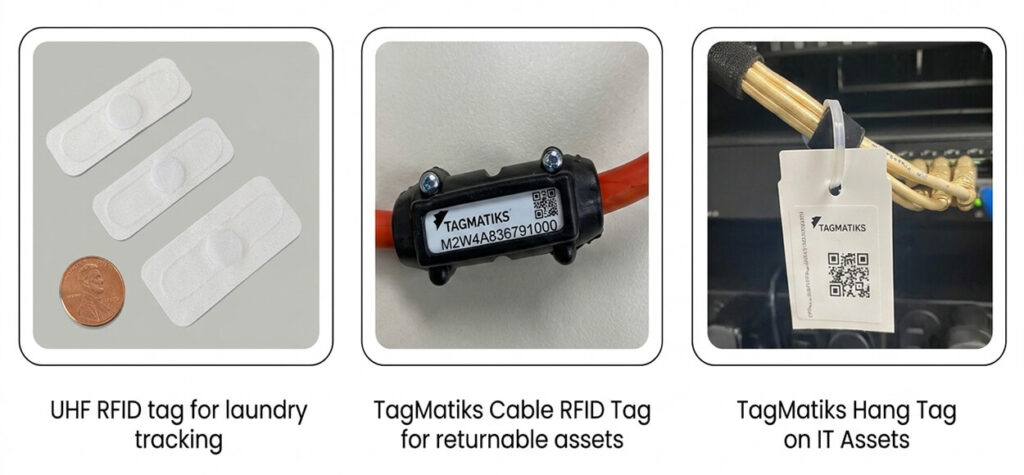
Types of RFID Tags
- Passive RFID Tags:
These tags do not have a battery and are powered by the RFID reader. They are cost-effective and widely used for inventory tracking in retail, warehouses, and manufacturing. - Active RFID Tags:
Equipped with a battery, these tags can transmit signals over longer distances. They are ideal for tracking high-value assets, vehicles, or large equipment. - Semi-Passive (Battery-Assisted) Tags:
These tags use a battery to power the chip but rely on the reader to communicate. They offer better performance than passive tags and are used in specialised environments.
Cost of RFID Tags
- Passive Tags: Low cost (typically ₹5 to ₹50 per tag depending on type and volume)
- Active Tags: Higher cost (₹500 to ₹2000+ per tag)
- Semi-Passive Tags: Moderate cost (₹100 to ₹500 per tag)
Costs vary based on factors like memory size, durability, frequency, and special features (e.g., anti-metal, temperature resistance).
Best Uses of RFID Tags
- Retail Inventory Management:
Track products efficiently and reduce stock discrepancies. - Warehouse Operations:
Automate stock counting and improve inventory accuracy. - Manufacturing:
Monitor raw materials, work-in-progress, and finished goods. - Asset Tracking:
Keep track of tools, equipment, and returnable containers. - Logistics and Supply Chain:
Enable real-time tracking of shipments and improve delivery accuracy.
RFID Readers: Best Options & How They Impact Inventory Accuracy
When deploying RFID readers like the CC-04, it’s important to plan based on your tracking points—typically, one reader is required for each key location where items need to be monitored. Businesses can choose between fixed RFID readers, which are installed at specific points such as dock doors, entry/exit gates, or conveyor lines, and handheld readers, which offer mobility for manual inventory checks across different areas.
Fixed readers provide continuous, automated tracking as items pass through designated zones, making them ideal for real-time visibility. On the other hand, handheld readers are more flexible and cost-effective, especially for smaller operations or periodic inventory counting. Many businesses adopt a hybrid approach, combining both types to achieve the right balance between automation and flexibility.
It’s also important to consider that the cost of RFID readers depends more on their features, performance, and build quality rather than just the quantity purchased. Additionally, the total investment often goes beyond the reader itself. Supporting components such as power supplies, cables, mounting accessories, antennas, and charging cradles (for handheld devices) are typically required to complete the setup.
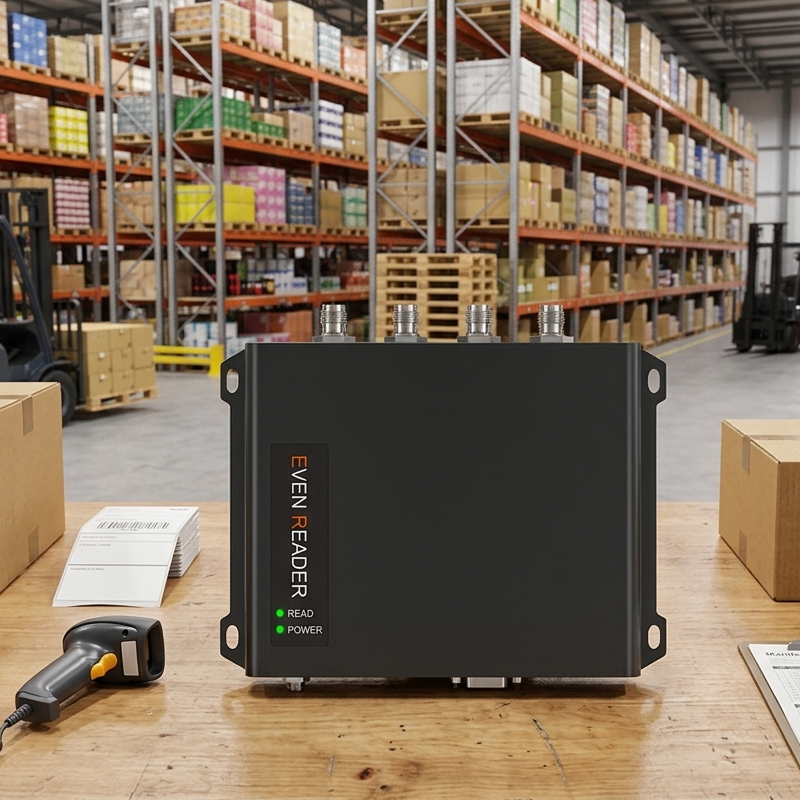
Fixed Reader Requirements
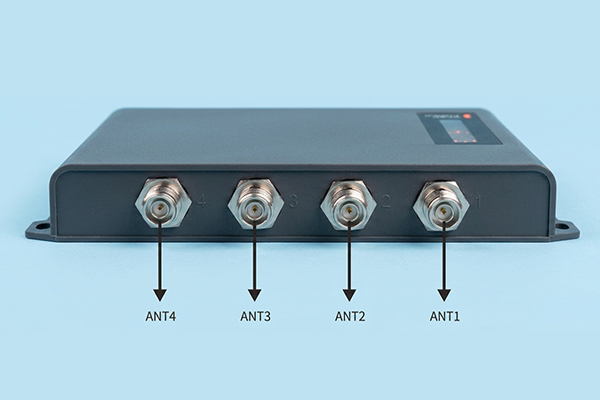
Fixed RFID readers will therefore require proper installation and supporting infrastructure to operate effectively. This includes mounting the reader at strategic locations such as entry/exit points, dock doors, or conveyor lines where items frequently pass through.
In addition to the reader itself, external antennas are typically needed to create the desired read zones and ensure accurate tag detection. Proper cabling, power supply, and network connectivity (Ethernet or Wi-Fi) are also essential for seamless data transmission.
Careful planning of antenna placement and read range is important to avoid missed reads or interference. When set up correctly, fixed readers provide continuous, automated tracking and significantly improve inventory accuracy.
HANDHELD (MOBILE) READERS
Handheld Reader Requirements
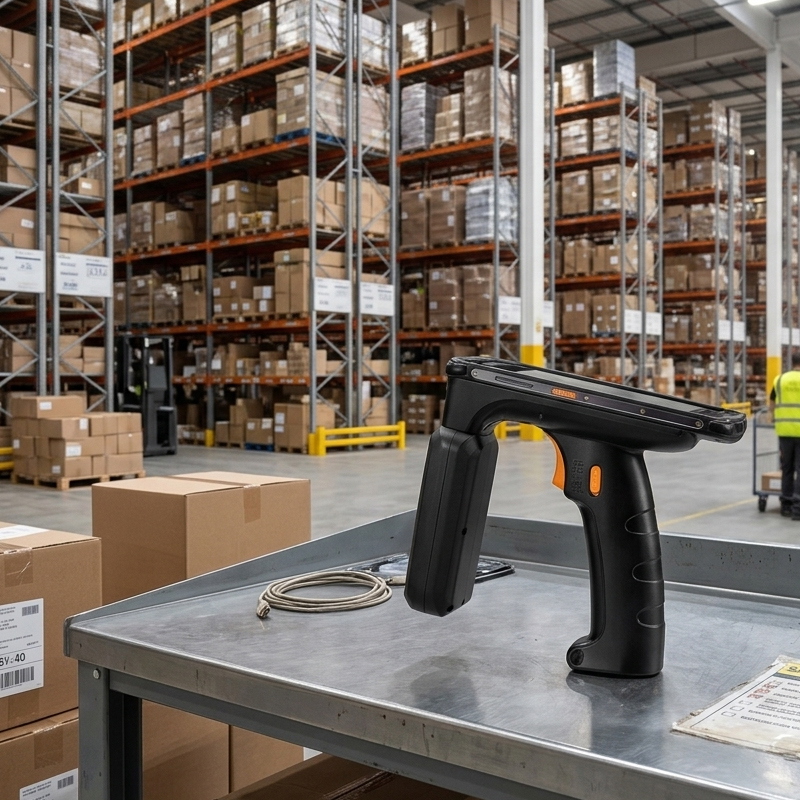
Handheld RFID readers require minimal setup compared to fixed systems, making them ideal for flexible and mobile operations. These devices are portable and typically come with built-in antennas, batteries, and connectivity options.
To operate effectively, handheld readers need regular charging or battery management, along with software or mobile applications for data collection and synchronisation. They may also require Wi-Fi or Bluetooth connectivity to transmit data to backend systems in real time.
In addition, accessories such as charging cradles, protective cases, or holsters can enhance usability and durability in industrial environments. When used properly, handheld readers provide efficient and accurate inventory tracking, especially for manual audits and smaller-scale operations.
RFID Inventory Management Software to Improve Visibility and Reduce Operational Costs
Real-Time Inventory Visibility
RFID software provides instant updates on inventory movement and stock levels. This allows businesses to monitor items across warehouses, production lines, and supply chains without delays.
Automated Data Collection
The software automatically captures data from RFID readers, eliminating manual entry. This reduces human errors and ensures accurate, reliable information.
Improved Inventory Accuracy
With continuous tracking and updates, businesses can maintain precise stock records. This minimises discrepancies between physical and system inventory.
Efficient Stock Management
RFID software helps optimise stock levels by preventing overstocking and stockouts. It supports better demand planning and inventory control.
Faster Inventory Audits
Bulk scanning capabilities allow quick inventory checks, saving time and labour compared to traditional methods.
Cost Reduction
By improving efficiency, reducing errors, and minimising losses, RFID software helps lower operational and labour costs.
Enhanced Traceability
Tracks the complete lifecycle of products, from production to delivery. This is especially useful for quality control and compliance.
Seamless System Integration
RFID software can integrate with ERP, WMS, and other business systems for smooth data flow and better decision-making.
Better Decision-Making
Provides analytics and reports that help businesses identify trends, optimise operations, and improve overall performance.
Scalability and Flexibility
The software can be scaled as business operations grow, making it suitable for small, medium, and large enterprises.
CategoryBlog